WHAT IT IS
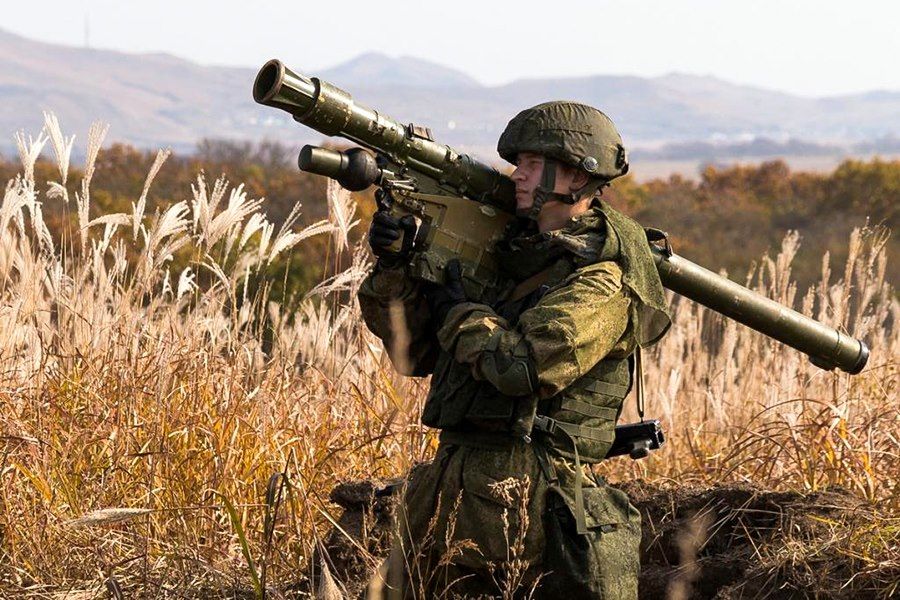
Igla (Игла, "needle") is the Soviet and Russian family of shoulder-fired infrared-homing surface-to-air missiles that followed the Strela-2 and Strela-3. KBM at Kolomna designed it, and the Degtyarev plant at Kovrov builds it. Three main versions exist: the simplified 9K310 Igla-1 (NATO SA-16 Gimlet, 1981), the full 9K38 Igla (SA-18 Grouse, 1983) and the much improved 9K338 Igla-S (SA-24 Grinch, 2002-2004). [DOCUMENTED] It has been one of the most widely used MANPADS in the world for four decades and is still the most common Russian one at the front, alongside the newer Verba. [ESTIMATE]
In the Russo-Ukrainian war both sides use Igla, against attack aircraft, helicopters, cruise missiles and drones. That makes it one of the few weapons that is a front-line air-defence tool for both armies at once. [DOCUMENTED]
VERSIONS
| System | Missile | NATO | Service | Key change |
| 9K310 Igla-1 | 9M310 / 9M313 | SA-16 Gimlet | 1981 | interim version with simpler seeker; tripod-held nose cone |
| 9K38 Igla | 9M39 | SA-18 Grouse | 1983 | 9E410 two-colour (IR + UV-assisted) seeker, better flare rejection, limited all-aspect capability |
| 9K338 Igla-S | 9M342 | SA-24 Grinch | tests done Dec 2001, service 2002, series from 1 Dec 2004 | more sensitive seeker, heavier warhead with laser proximity fuze, range up to 6 km |
| Igla-M / naval | 9M39 family | SA-N-10 Grouse | 1980s on | naval mounts for small ships |
| Igla-V | 9M39 / 9M342 | - | helicopter-launched | air-to-air version on Ka-52, Mi-28N, Mi-35M |
Service dates in the table come from en.wikipedia and Russian manufacturer data. Some sources give 2004 for the Igla-S because that is when the series started. [DOCUMENTED]
IGLA-1 AND IGLA
The Igla programme started in the 1970s to fix the Strela-2's weaknesses: poor flare rejection and almost no ability to engage from the front. The full seeker took too long, so the simpler Igla-1 was fielded first in 1981. It used the 9M310 missile, with a nose cone held by a wire tripod instead of the later aerodynamic spike, and the later 9M313 added a two-colour seeker. [DOCUMENTED] (Defense Update; en.wikipedia.)
The 9K38 Igla with the 9M39 missile was accepted in 1983. Its 9E410 seeker works in infrared and ultraviolet, which makes flares less effective and copes with lamp-type infrared jammers (but not shutter-type). It can sometimes engage fighters approaching head-on, and its rocket burns harder and shorter for a higher peak speed. Finnish forces, which used Igla alongside the French Mistral, rated the Igla seeker better. [SINGLE-SOURCE] (en.wikipedia, citing Finnish sources.)
IGLA-S
The 9K338 Igla-S keeps the weight, size, launch preparation and handling of the Igla but adds a more sensitive seeker with digital processing, better rejection of modern flares and background clutter, a heavier fragmentation warhead and a laser proximity fuze that triggers within about 5 m of the target. Range grows to about 6 km. The manufacturer claims a single-shot hit probability of 0.8-0.9, and two to five times the Igla's effectiveness, especially against cruise missiles and small targets. [SINGLE-SOURCE] (KBM / Rosoboronexport via Army Recognition.)
The set consists of the 9M342 missile, the 9P522 gripstock, the 9V866-2 mobile test station, the 9F719-2 test set, training equipment and night sights. [DOCUMENTED] (Rosoboronexport.)
| Parameter | Igla (9M39) | Igla-S (9M342) |
| Range | 500-5,200 m | 500-6,000 m |
| Altitude | up to 3,500 m | 10-3,500 m |
| Missile weight | about 10.8 kg | about 11.7 kg |
| System weight | about 17.9 kg | about 18-19 kg [ESTIMATE] |
| Warhead | about 1.17 kg, contact and graze fuze | about 2.5 kg, contact plus laser proximity fuze |
| Peak speed | about 570 m/s | about 570 m/s class |
| Target speed | up to about 360 m/s head-on | up to 400 m/s head-on, 320 m/s tail-chase |
| Ready time | about 13 s | about 13 s |
Figures are compiled from en.wikipedia and Defense Update. The Igla-S warhead mass in particular varies between sources. [ESTIMATE]
MOUNTS AND LAUNCHERS
IGLA IN THE UKRAINE WAR: UKRAINIAN SIDE
IGLA IN THE UKRAINE WAR: RUSSIAN SIDE
PRE-LAUNCH SEQUENCE: THE BATTERY-COOLANT UNIT AND GYRO SPIN-UP
The ground power source. Every Igla round is fired with a one-shot 9B238 ground power source (НИП, often called the battery-coolant unit or BCU in English). It screws into the launch tube and contains two parts: a spherical bottle of nitrogen at 350 kgf/cm² (410 at +50 °C) and a thermal battery with a solid electrolyte. [DOCUMENTED] (Sources 11, 12.) The unit weighs 1.3 kg, of which the battery is 0.46 kg. It produces +20 V, -20 V and +5 V, comes up to working state in about 1.3 s, and runs for at least 30 s. The coolant supply lasts the same time. [DOCUMENTED] (Source 12.)
What happens when the gunner activates it. The gunner turns the piercing lever. A striker pierces the bottle membrane, and the nitrogen flows through a pipe in the tube to the seeker's micro-cooler. At the same time gas pressure drives a second striker into the battery primer, and pyrotechnic heaters melt the electrolyte so the battery starts to deliver power. [DOCUMENTED] (Source 12.) The nitrogen is throttled until it liquefies at -196 °C (77 K) and cools the InSb photoresistor of the main channel. The required temperature is reached 4.5 s before launch and held for 14 s after it. [DOCUMENTED] (Source 11.) At the same time, the spin-up unit in the gripstock drives the seeker gyroscope rotor through stator coils, switching every 180°. In no more than 5 s the rotor reaches 100 revolutions per second. The spin-up unit then switches off, the seeker's speed-stabilisation system holds the speed, and the seeker is caged to the sight axis. [DOCUMENTED] (Source 11.)
Why it matters. This is the 5-second window of hiss and rising whine before the gunner can release the seeker and fire. The same physics, a gyro spin-up plus throttled-nitrogen cooling, sits behind the whirr heard before a Strela-10 launch. There the vehicle supplies the power and coolant, and the 9E47 gyro runs up to about 68 rev/s in 5 s. [DOCUMENTED] (Source 13.) The site owner identified the sound from combat videos and confirms this interpretation. [FIELD ACCOUNT, site owner] Because the unit is single-use, a gunner who activates it and does not fire within about 30 s needs a new unit before trying again. [ESTIMATE] (from the 30 s rating, Source 12.) The Verba works on the same principle. [ESTIMATE]
THE 9K38 SET: WHAT A CREW ACTUALLY CARRIES
The Soviet field manual tradition, as reproduced by Akulov, describes the 9K38 Igla as a set of combat and support items. It is more than a tube. [DOCUMENTED] (Source 14.) The combat means are:
The support means include the 9V866 and 9F719 check and test equipment for the missiles and gripstocks, plus several trainers: the 9F635 simulator, the 9F663 trainer, the 9K38UR inert training set, and the 2U438 practice firing aid. [DOCUMENTED] (Source 14.) Because of this set, the Soviet Igla was a team system linked to the air-defence picture. A lone shooter with a tube is a different and much weaker case. [BACKGROUND]
9M39 MISSILE: CONSTRUCTION AND FLIGHT
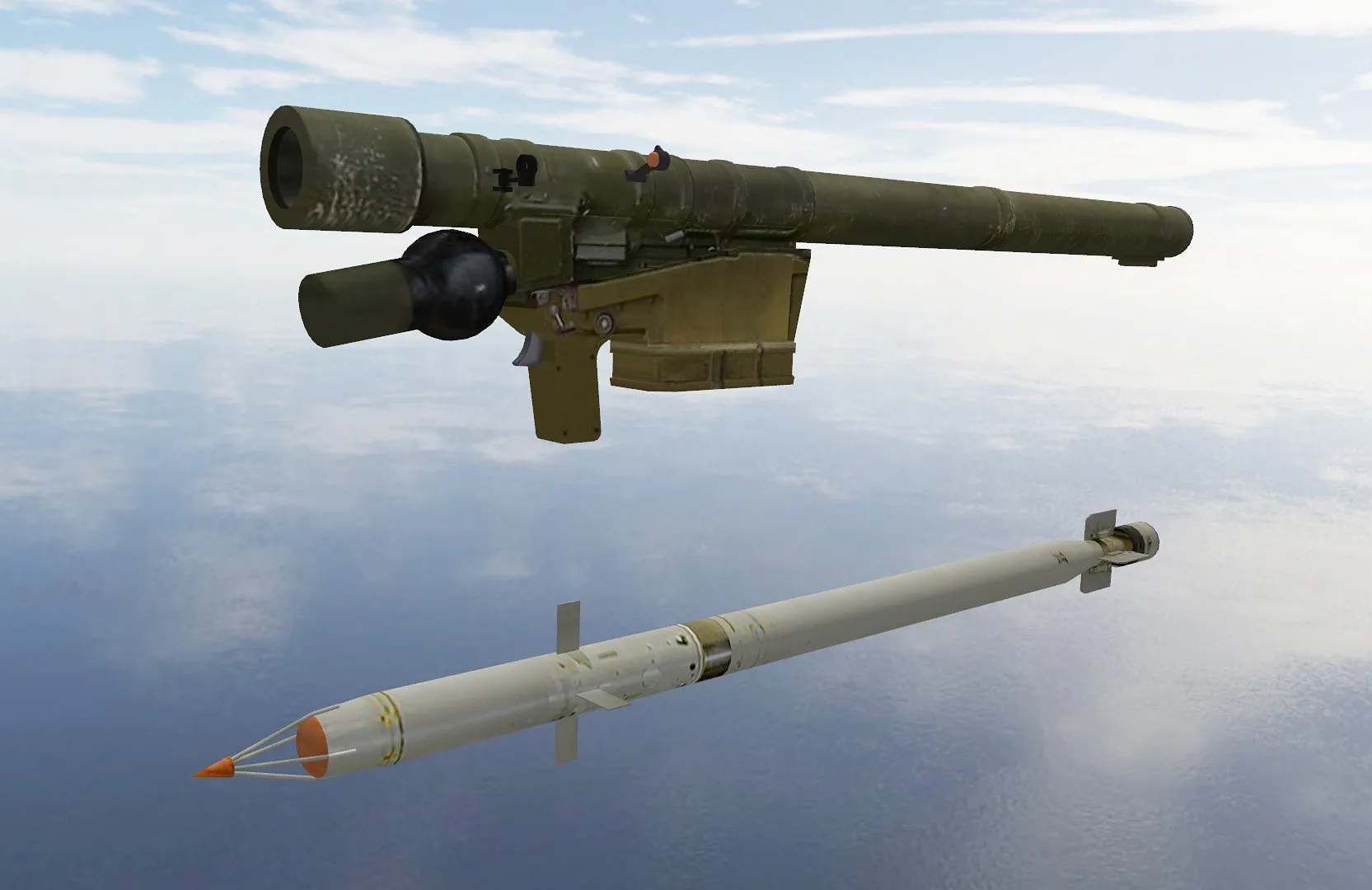
| 9M39 parameter | Value |
| Calibre / length | 72.2 mm / 1,639 mm |
| Missile mass | 10.6 kg |
| Warhead mass | 1.27 kg |
| Seeker instantaneous field of view | 2° |
| Gimbal (coordinator) limit | ±38° |
| Ejection speed from tube | 28-30 m/s |
| Cruise speed | 340-570 m/s |
| Roll rate in flight | 12-20 rev/s |
| Available load factor | up to 10.2 g |
| Range / minimum altitude | 500-5,000 m / 10 m |
| Max target speed (head-on / tail-chase) | 360 / 320 m/s |
| Travel to combat position | up to 13 s |
| Operating temperature | -44 to +50 °C |
Source for all table figures: Akulov, after the official manual. [SINGLE-SOURCE] (Source 14.) Other references round some of these differently. For example, 570 m/s is often quoted as about 600 m/s, and 10.8 kg is sometimes given as the launch mass. [BACKGROUND]
Launch sequence. A small ejection motor pushes the missile out of the tube at 28-30 m/s. The sustainer motor ignites only once the missile is at least 5.5 m from the gunner, which protects the shooter from the efflux. [DOCUMENTED] (Source 14.) The fuze arms in two stages. The second stage completes 1-1.9 s after launch, and a missile that has not hit anything self-destructs 14-17 s after launch. [DOCUMENTED] (Source 14.) The missile rolls at 12-20 rev/s and steers with a single pair of canards, a common design for MANPADS of this class. [DOCUMENTED] for the roll rate (Source 14); [BACKGROUND] for the control layout.
THE SEEKER AND COUNTER-COUNTERMEASURES
The Igla's main advance over the Strela-3 was a two-channel seeker built to reject flares. [DOCUMENTED] (Source 14.)
Aim offset. An IR seeker naturally homes on the hottest point, the engine nozzle, and a hit there often damages but does not kill. The 9M39 has an aim-offset circuit that shifts the impact point forward from the nozzle into the fuselage in the final phase of flight. [DOCUMENTED] (Source 14.)
Explosive generator. On impact a separate explosive generator detonates the unburnt sustainer propellant, so the leftover fuel adds to the warhead effect. A hit soon after launch therefore delivers more energy than one at maximum range. [DOCUMENTED] (Source 14.) The 10° depressed sight line in the guidance logic helps the missile avoid the ground at very low launch angles. [DOCUMENTED] (Source 14.)
IGLA-1 VERSUS STRELA-3: THE STEP CHANGE
| Parameter | Strela-3 (9K36) | Igla-1 (9K310) | Igla (9K38) |
| Seeker | single-channel, cooled | single-channel with flare-logic, cooled | two-channel (InSb + PbS) |
| Missile speed | see Source 14 | 560 m/s | 570 m/s |
| Kill probability (single fighter, no CM) | see Source 14 | 0.4 | not given here |
| Preparation time | see Source 14 | 13 s | up to 13 s |
The Igla-1 figures are from Akulov's comparison table. [SINGLE-SOURCE] (Source 14.) The Strela-3 values in that table were not transcribed here. The Igla-1 was an interim system with a simpler seeker, fielded in 1981 while the full Igla seeker matured. The 9K38 followed in 1983. [DOCUMENTED] (Source 15.)
COMBAT HISTORY BEFORE UKRAINE
IGLA-S IN DETAIL
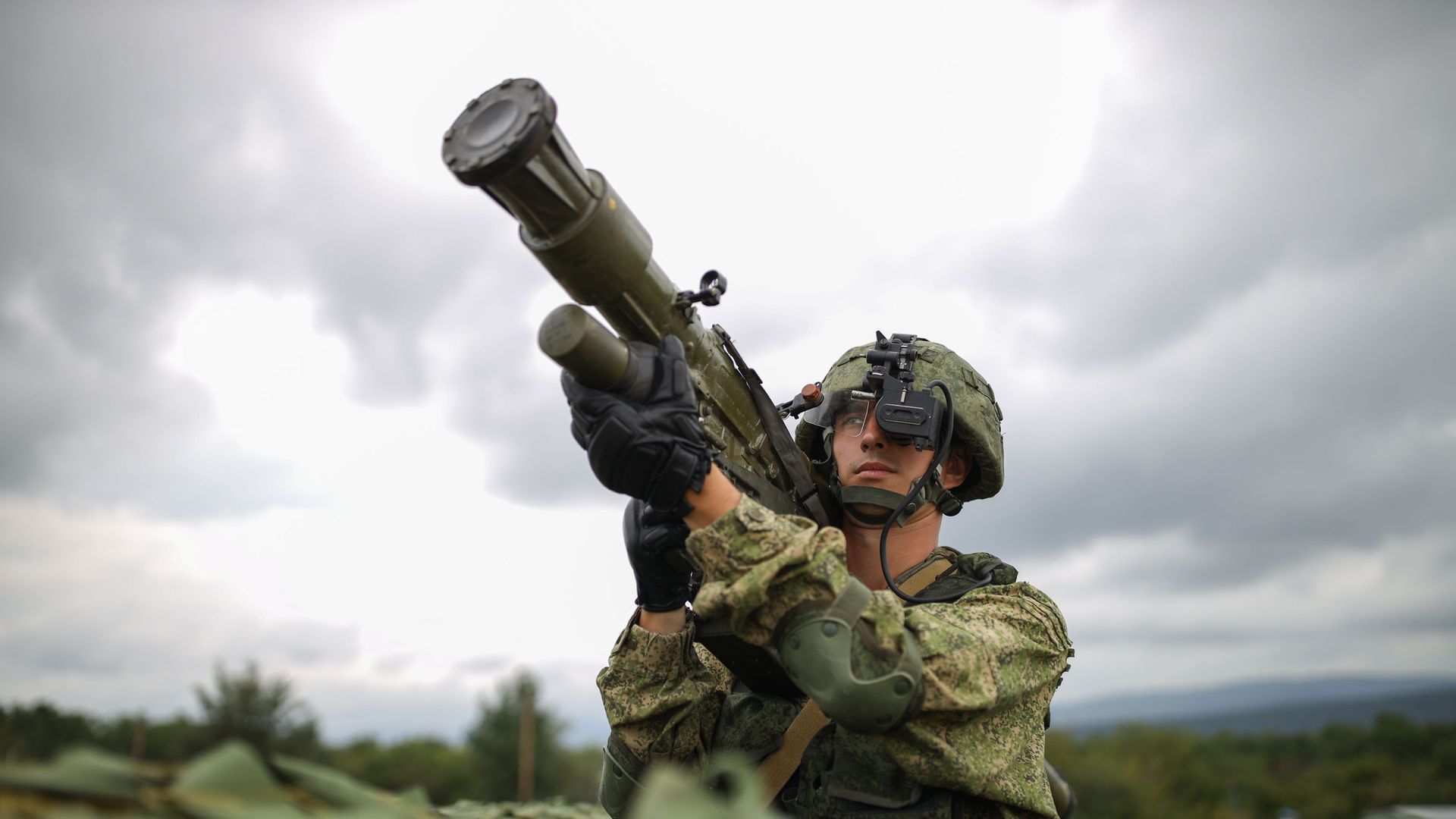
The 9K338 Igla-S (SA-24 Grinch) adds a larger warhead of about 2.5 kg, more effective guidance against small targets such as cruise missiles and drones, a range of up to 6 km and a ceiling of 3.5 km. It was accepted in 2002. [DOCUMENTED] (Source 15.) It was widely exported. en.wikipedia lists operators including Brazil, Egypt, India, Libya, Venezuela and Vietnam, and India placed new Igla-S orders in the 2020s, including local production linked to Indian firms. [SINGLE-SOURCE] (Source 15.) In Russian service it is being replaced by the Verba, but the Igla-S remains in production. [BACKGROUND]
The site owner's experience on the ground: the Igla family remains the common baseline weapon of Russian and Ukrainian short-range air defence. Its weakness against modern drones is the low heat signature of piston-engined and electric UAVs. [SPECULATION, site owner] A thermal sight adapter for Igla and Verba was reported in July 2025. It lets gunners detect targets at night and in haze before handing over to the missile seeker. [SINGLE-SOURCE] (Source 16.)
PLACE IN THE LAYERED DEFENCE
In Russia's layered air defence, Igla is the lowest missile layer together with Verba. It sits below the vehicle systems (Tor, Pantsir, Strela-10 and Sosna), and the brigade and district layers (Buk-M3, S-300, S-400). Its job against drones is the same as Verba's: shoot what slips past electronic warfare and the bigger systems, at a price per missile that is still too high for small drones. [ESTIMATE]
EXPORTS AND OPERATORS
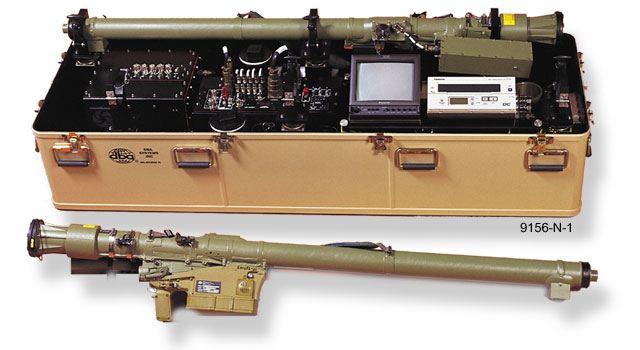
Igla and Igla-1 have gone to more than 30 countries. The list includes Angola, Brazil, Bulgaria, Croatia, Cuba, Egypt, Ecuador, Finland, India, Iran, Iraq, Malaysia, Mexico, North Korea, Peru, Poland, Serbia, Singapore, Slovakia, Slovenia, South Korea, Thailand, Turkey, Ukraine, the UAE and Vietnam. [DOCUMENTED] (en.wikipedia.) Vietnam reportedly received a licence for local Igla-S production. [SINGLE-SOURCE] (Defense Update.)
SOURCES
The site owner reports that Gibka-S, Verba and Igla groups cued by the 1L122 Garmon radar have claimed a large number of drones, and that he has seen videos of soldiers firing Verba at drones at point-blank range in large built-up city areas. [FIELD ACCOUNT, site owner] Publicly, the Russian Ministry of Defence released footage on 6 June 2024 of Ivanovo paratroopers shooting down a Ukrainian drone with Verba at Chasiv Yar, Donetsk region, and further Verba-versus-UAV footage was published in November 2023. [DOCUMENTED] (Russian MoD via RT, 2 Nov 2023; Rainews and www1.ru, 6 Jun 2024.) Claimed kill totals have not been independently verified. [UNVERIFIED]
Related on this site: Gibka-S, 1L122 Garmon, Verba, Strela-10, Tunguska, Sosna, Tor.
Related on this site: Russian Unified Air Defense (how the layers fit together).
Project Orlan // Underground Information Database