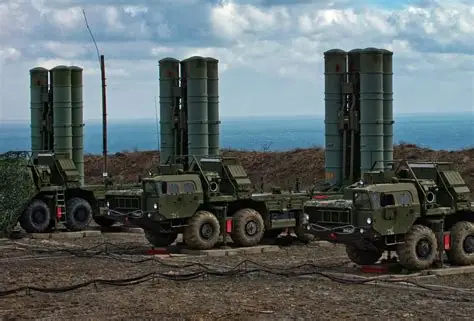
Russia does not have one air-defence system. It has a stack of them, owned by different services, built by different design bureaus over sixty years, and joined by automated command posts and radio, relay and cable networks that are only partly described in open sources. This article walks through that stack from the bottom up: a machine gun on the back of a pickup truck, MANPADS teams with a backpack radar, the gun-missile and short-range missile vehicles, the medium and long-range SAM regiments, the Moscow anti-ballistic-missile system, the radars that feed all of them, the satellites at the top, and the command chain that is supposed to make it one system. It then goes threat by threat, and ends with three scenarios.
Most of the individual layers already have their own deep articles on this site, linked in each section. This page is the map that ties them together. Numbers here are kept to the level the sources support; where a figure is a manufacturer claim, it is labelled as such. The Russian term for what is described here is воздушно-космическая оборона (ВКО), aerospace defence, of which противовоздушная оборона (ПВО, air defence) and противоракетная оборона (ПРО, missile defence) are parts. [BACKGROUND]
QUICK FACTS * Who owns it: the Aerospace Forces (ВКС, VKS) own the strategic air-defence and missile-defence layers, including the Moscow region through the 1st Air and Missile Defence Army (Special Purpose), the missile-warning network and space surveillance. The Ground Forces own military air defence (войсковая ПВО): Tor, Buk, Strela-10, Tunguska, Pantsir in some units, MANPADS. The Navy has its own shipborne systems. [DOCUMENTED] * Layers, bottom to top: small arms, machine guns and ZU-23-2 on vehicles and mobile fire groups; MANPADS (Igla, Verba) with Gibka-S and Garmon; short-range Pantsir, Tor, Strela-10/Sosna, Tunguska; medium-range Buk-M2/M3 and S-350; long-range S-300P/PM, S-300V/V4, S-400, S-500; strategic A-135 / A-235 around Moscow. [DOCUMENTED] * Sensors: EKS Kupol satellites; Voronezh and remaining Dnepr/Daryal early-warning radars; 29B6 Container over-the-horizon radar; Don-2N; Nebo-M, Podlet, Kasta and other radar-troop sets; system radars (91N6E, 96L6, 9S18, 9S36); A-50 / A-50U airborne radars; visual air observation posts. [DOCUMENTED] * Glue: automated control systems (АСУ): Polyana-D4 (9S52) for army brigades, Baikal-1 and Universal-1 for Aerospace Forces units, Fundament for radar-troop data, Ranzhir for short-range batteries, system command posts such as 55K6E and 9S457; plus the field and fixed communication networks covered in Russian C3. [DOCUMENTED that these systems exist; details vary by source] * 2026 picture: since 2022 the system has been tested every night by Ukrainian long-range one-way attack drones, missiles and, at the front, FPV and fixed-wing drones. Russia has answered with mobile fire groups, interceptor drones, helicopters and a "unified information environment", announced by the defence minister in June 2026. [DOCUMENTED as official statements]
THE LAYERS AT A GLANCE
| Layer | Main systems |
|---|---|
| Guns and mobile fire groups | Machine guns, Kord, ZU-23-2 on pickups and trucks |
| MANPADS | Igla, Verba, with Gibka-S and Garmon |
| Short range | Pantsir, Tor, Strela-10 / Sosna, Tunguska |
| Medium range | Buk-M2/M3, S-350 |
| Long range | S-300P/PM, S-300V/V4, S-400, S-500 |
| Strategic missile defence | A-135 / A-235, Don-2N |
| Early warning | Kupol satellites, Voronezh, Dnepr/Daryal, 29B6 Container |
HOW THIS PAGE USES THE LABELS [DOCUMENTED] means at least two independent sources, or one primary official source for a plain fact. [SINGLE-SOURCE] means one source only. [UNVERIFIED] is a claim I could not check. [ESTIMATE] is my reasoning from documented facts. [SPECULATION] is synthesis beyond the sources, used mainly in the scenarios. [BACKGROUND] is general context. "Sources conflict" flags disagreement. Ranges and kill claims are almost all manufacturer or ministry figures; neither side's claims about the war are independently verified.
1. THE LOWEST LAYER: GUNS, PICKUPS AND MOBILE FIRE GROUPS The bottom of the system is not a missile at all. Since the long-range drone campaign began, the cheapest kill of a slow, propeller-driven drone is a stream of bullets. Russia's answer is the mobile fire group (мобильная огневая группа, МОГ): a few soldiers with a heavy or general-purpose machine gun on a pickup, buggy, truck or light armoured car, tied to visual observers. [DOCUMENTED]
Izvestia visited mobile fire groups of the 110th Brigade of the 51st Guards Army (Group of Forces "Centre") in the Donetsk region in 2026. It described them as "one of the key elements in the fight against new aerial threats": machine-gun crews on vehicles that cover road traffic, move out on a signal from air observation posts, and patrol the gaps between fixed firing points. The pickup in the report carried a Kalashnikov tank machine gun on a rotating mount with an electric trigger and more than a dozen EW antennas on its sides; the crew said those antennas were for FPV drones hunting the gunners, not for the main target. The main target in the rear was the Ukrainian "Hornet" fixed-wing drone, cruising at about 80 km/h in search mode, slow enough that a car can overtake it and get into position. Observers call the stop, dismount and steer the gunner by tracer. [SINGLE-SOURCE, Izvestia]
A second Izvestia report described a special-forces mobile fire group using Tigr armoured cars and a PKP Pecheneg, with working distances up to about 300 m, closing in on the drone rather than waiting for it; the soldiers called a small armoured car with an all-round turret the best vehicle for the job. Zvezda reported a 110th Brigade group claiming five drones in four hours, one with six rounds. Izvestia also reported that mobile fire groups were being formed inside motor-rifle regiments to cover rear objects, equipped with EW stations, automatic weapons, smoothbore shotguns and night-vision devices. [SINGLE-SOURCE each; kill counts are the soldiers' own claims]
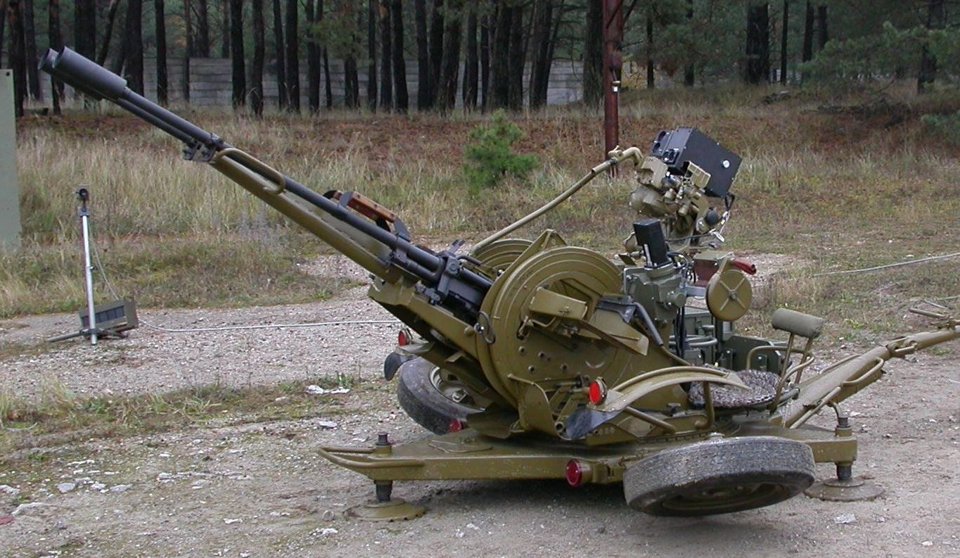
Around refineries, airfields and other fixed sites in Russia, the same idea appears as volunteer and territorial defence units with machine guns, and as ZU-23-2 twin 23 mm cannon on trucks. The ZU-23-2 article covers that gun and its use on improvised carriers; the ZSU-23-4 Shilka is its tracked, radar-directed ancestor. [DOCUMENTED]
In June 2026 Defence Minister Andrey Belousov told military correspondents that "in all of the battlegroups, layered air defences have been built" against drones, and that "we are now actively introducing mobile fire groups armed primarily with interceptor FPV drones". So by mid-2026 the official model of the mobile fire group is a team whose main weapon is a drone that rams or blows up the attacking drone, with guns as a backup. [DOCUMENTED, TASS, RIA Novosti, Vedomosti, Anadolu, 29 June 2026]
Electronic warfare as a layer. Jamming is the invisible part of the bottom layer. Vehicle and trench jammers against FPV control links, GNSS jamming and spoofing around strategic sites, and larger army EW systems of the Krasukha family (1L269 Krasukha-2, 1RL257 Krasukha-4), which are primarily designed against airborne radars and satellite links rather than small drones, all sit alongside the kinetic layers. Open sources describe large-area GNSS disruption around Russian cities and bases, but do not let me tie a particular system to a particular effect, so this article does not go further. Fibre-optic and AI-terminal-guided drones, as the Izvestia report notes, are why kinetic means are back in front. [DOCUMENTED in general; system attribution UNVERIFIED]
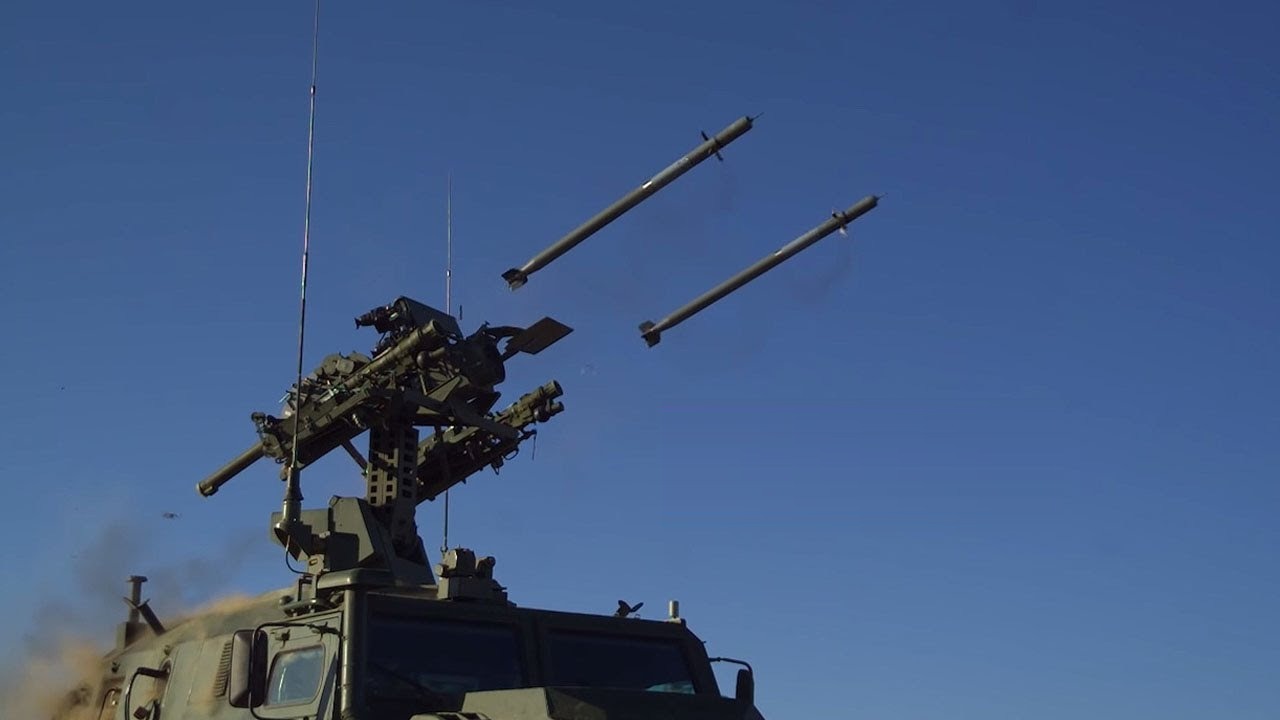
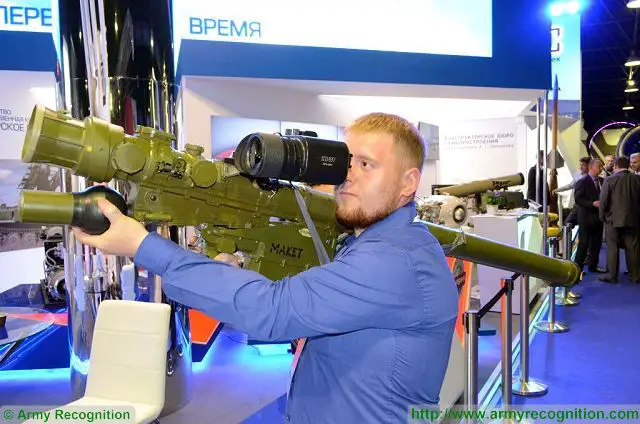
2. MANPADS, GIBKA-S AND GARMON Above the guns are the shoulder-fired missiles: the 9K38 Igla, Igla-S, and the 9K333 Verba, with infrared seekers and ranges of a few kilometres. A MANPADS gunner alone sees only what his eyes see. The fix for that is the Gibka-S (9K338-family support system): a Tigr-based combat vehicle with a turret holding launch tubes, and a command vehicle carrying the small 1L122 Garmon L-band 3D radar, which gives the section a radar picture out to about 40 km and passes target data down to the gunners. [DOCUMENTED; see those articles for details]
Garmon also exists as a portable set used by MANPADS and short-range crews, and has been hunted repeatedly by Ukrainian drones, which is the recurring theme of the bottom layers: anything that radiates becomes a target. [DOCUMENTED]
3. HELICOPTERS AS DRONE HUNTERS Attack helicopters have become an air-defence layer in their own right, mainly against long-range fixed-wing drones over Russian territory. [DOCUMENTED]
In September 2026 footage published by the Telegram channel "Бортовой журнал военлета" and reported by Lenta, SouthFront and Military Watch Magazine showed Mi-28N/NM cockpit displays as the crew destroyed Ukrainian FP-1 and MICH-2000 one-way attack drones with the 30 mm 2A42 cannon. SouthFront counted two FP-1s and one MICH-2000 and noted that the date of the footage was unknown; Military Watch Magazine said the date and place were not disclosed, and credited the Mi-28's fire-control system with calculating lead angles. Military Watch Magazine also says that the Mi-28's OPS-28M electro-optical system and N025 mast radar detect low-signature targets at up to 5 km; that figure is that magazine's alone. [DOCUMENTED that the footage was published; details SINGLE-SOURCE]
In August 2026 Kalashnikov's chief executive Alan Lushnikov told TASS that the Ka-52's laser-beam-riding Vikhr-1 anti-tank missile had been fitted on the company's initiative with a non-contact (proximity) target sensor, works "air-to-air", and is "already being used in combat" against fixed-wing drones. He said the missile is "far cheaper than any anti-aircraft missile" and that, since enemy drones must be shot down over Russian territory, helicopters are "easier and more dependable" than launching from large drones. The operator keeps the laser on the target; the missile rides the beam. [DOCUMENTED as a TASS interview, 10 August 2026; effectiveness is the manufacturer's claim] TURDEF adds that a 30 mm airburst round for the Ka-52's 2A72 cannon has been seen in limited use against a UAV. [SINGLE-SOURCE]
Why helicopters fit: a long-range drone flies at a car's speed or a bit more, low, along predictable routes. A helicopter can loiter on that route, see the drone with its own sight, and spend cannon shells or a cheap missile instead of a SAM round. Its limits are weather, night, crew fatigue and the number of airframes. [ESTIMATE]
4. SHORT-RANGE AIR DEFENCE (SHORAD) This is the layer that protects troops, big radars and point targets from aircraft, helicopters, cruise missiles, guided bombs and drones at up to about 10-20 km.
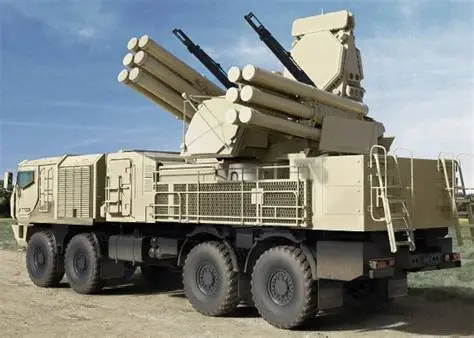
Pantsir-S1 / SM (96K6). A truck or tracked vehicle with an S-band search radar, a tracking radar, twelve radio-command 57E6-class missiles and twin 30 mm 2A38M guns, built by KBP Tula. Pantsir is the standard close guard of S-400 and S-300 regiments, especially around Moscow, and newer marks (SM, SMD and the small-missile "Gvozd" development) exist because cheap drones arrived. See Pantsir. [DOCUMENTED]
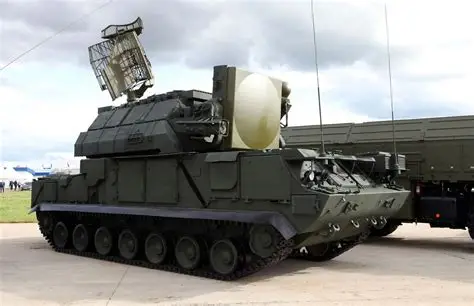
Tor-M2 (9K332). One vehicle that finds, tracks and fires: a rotating search radar and a phased-array engagement radar over 16 9M338 or older 9M331-class missiles, effective out to about 15 km. Tor batteries can work alone or be tied to a Ranzhir battery command post or a Polyana-D4 brigade post. See Tor. [DOCUMENTED]
Strela-10 and Sosna. The 9K35 Strela-10 is an MT-LB-based infrared missile carrier of the regiment level; the Sosna is its laser-beam-riding replacement with an optronic sight, meaning it emits nothing an enemy can hear until it fires. [DOCUMENTED]
Tunguska (2K22). The Tunguska combines two twin 30 mm cannon and optically-tracked radio-command missiles on a tracked chassis; it was Pantsir's predecessor and still serves with army units. [DOCUMENTED]
At sea the same layer is represented by Kortik / Kashtan and Pantsir-M. [DOCUMENTED]
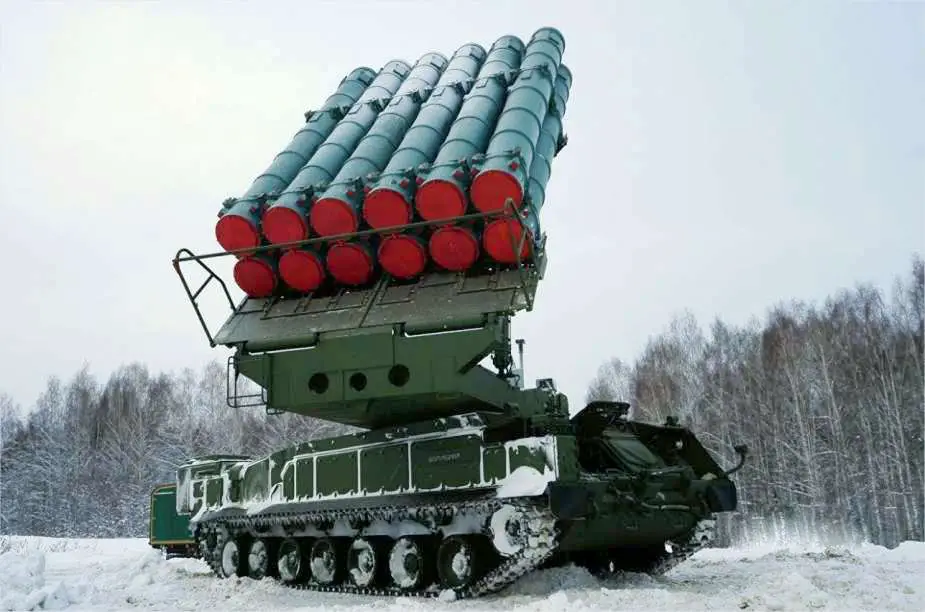
5. MEDIUM RANGE: BUK AND S-350 Buk-M2 / M3. The tracked Buk family is the army's medium-range system. The Buk-M3 battalion has a 9S510M command post, a 9S18M3 surveillance radar, a 9S36M mast radar, and 9A317M self-propelled fire units and 9A316M launchers, with a claimed 2.5-70 km range, 35 km ceiling and 36 target channels. Its TELARs can also fight autonomously. The Buk family has been described as integrating with Polyana-D4, Baikal-1ME, Ranzhir and Senezh command systems, but I found no source stating which the M3 itself uses. [DOCUMENTED; integration list SINGLE-SOURCE]
S-350 Vityaz (50R6). The S-350 is an Almaz-Antey wheeled system with a 50N6 multifunction radar, a 50K6 command post and 50P6 launchers holding twelve 9M96-family missiles each, meant to replace older S-300PS in Aerospace Forces units. It entered service around 2019-2020 and has been reported in Ukraine, including the Russian Ministry of Defence's claims of autonomous engagements. There is no separate article on this site yet. [DOCUMENTED in general; combat claims UNVERIFIED]
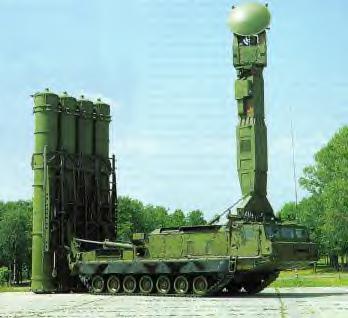
6. LONG RANGE: THE S-300 FAMILY, S-400 AND S-500 S-300 P-line and V-line. "S-300" names two different systems. The Almaz wheeled P-line (S-300PT, PS, PM, PMU1/2) is the Aerospace Forces' long-range SAM that evolved into the S-400. The Antey tracked V-line (S-300V, V4, export Antey-2500 / VM) is the Ground Forces' army-level system, with separate 9M83 and 9M82 missiles for aircraft and ballistic targets, two battalion radars (9S15 Obzor-3 all-round, 9S19 Imbir sector) and a 9S457 command post. See S-300 and S-300V. [DOCUMENTED]
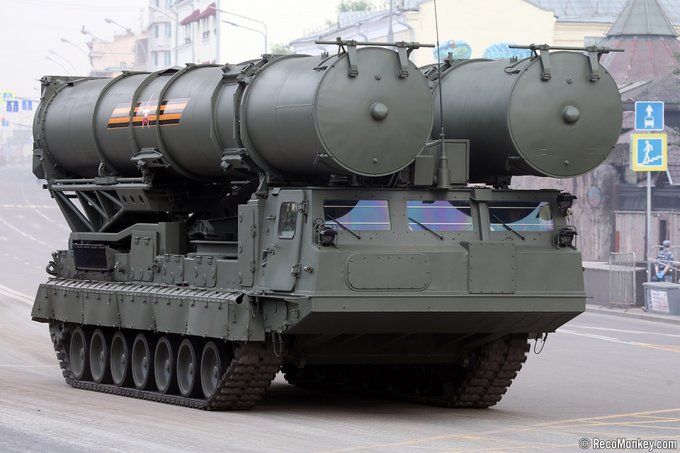
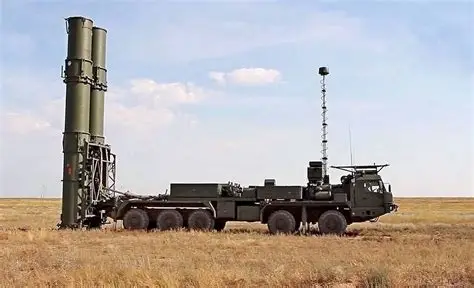
S-400 Triumf (40R6). The S-400 regiment is built around the 30K6E / 55K6E command post, the 91N6E acquisition and battle-management radar, the 92N6E engagement radar and launchers with 9M96 (short/medium), 48N6 (long) and 40N6 (very long, claimed up to 380-400 km) missiles. It can incorporate S-300PMU1/2 elements and, through its command post, Tor (via Ranzhir-M) and Pantsir batteries. See S-400. [DOCUMENTED; maximum ranges are manufacturer claims]
S-500 Prometheus (55R6M). The S-500 adds 76T6 / 77T6 radars and 40N6M and 77N6-series interceptors, with official claims of engaging ballistic, hypersonic and near-space targets at up to roughly 600 km range and 200 km altitude. The first regiment was reported to Moscow's defence in 2021. Numbers remain small and the claims are not demonstrated in public. [DOCUMENTED as claims]
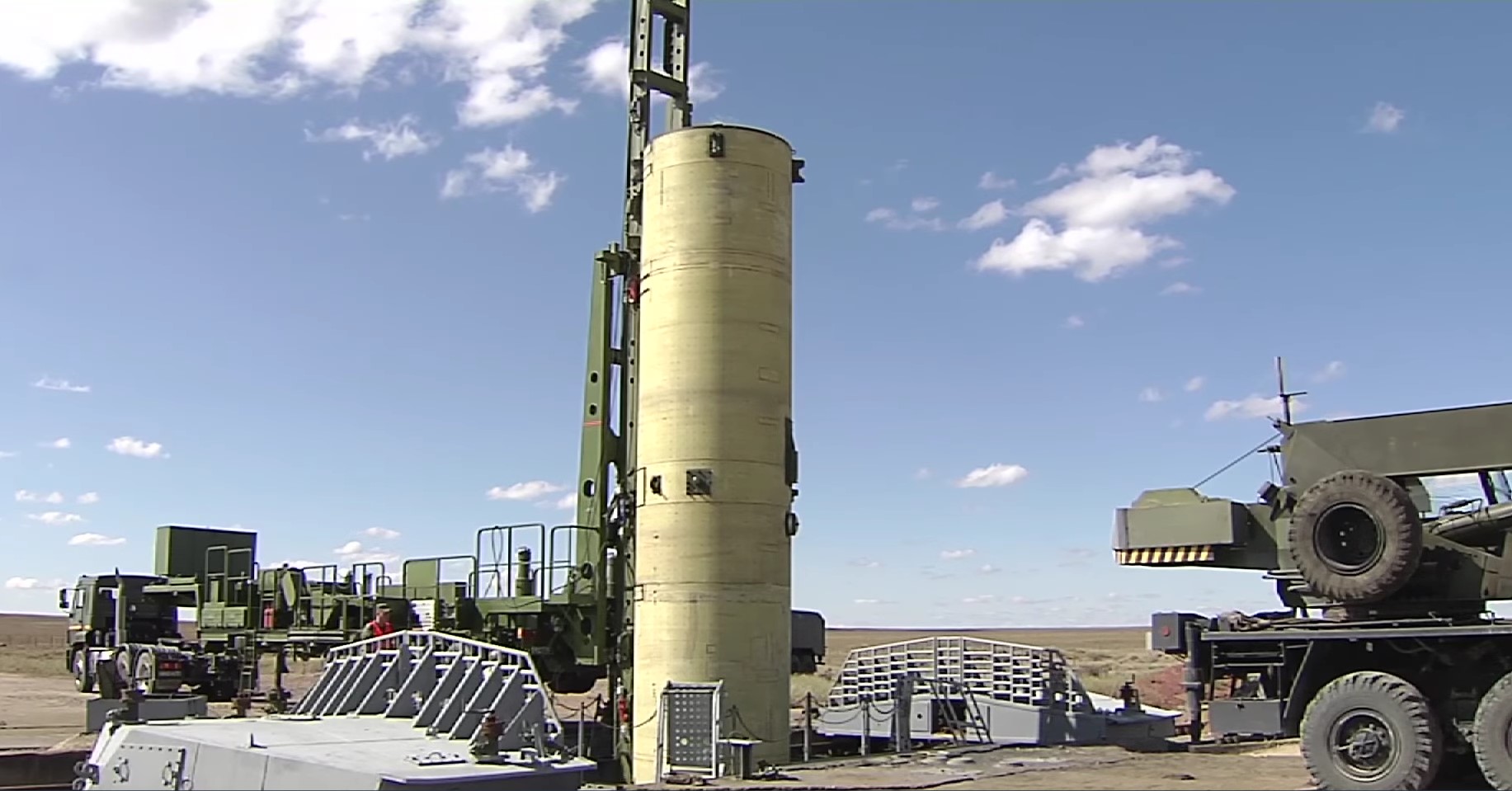
7. STRATEGIC MISSILE DEFENCE: A-135, A-235, DON-2N AND NUDOL At the top of the firing stack is the Moscow anti-ballistic-missile system. A-135 "Amur" was accepted around 1995-1996, with the Don-2N battle-management radar at Sofrino, a command-computing centre, and silo-launched interceptors: the long-range 51T6 (retired) and the short-range, very high-acceleration 53T6 (Gazelle), both designed for nuclear warheads. A-235 / A-135M is the modernisation; "Nudol" (14Ts033) is the name given to the long-range interceptor tested from Plesetsk, and a Nudol-family missile destroyed the Soviet satellite Kosmos-1408 in November 2021. See A-135 / A-235 / Nudol. [DOCUMENTED]
In 2021 the commander of the 1st Air and Missile Defence Army, Lieutenant General Andrei Demin, said his army covered the capital "from aircraft and cruise missiles, as well as from the warheads of intercontinental ballistic missiles", with two systems under one commander: the Moscow air-defence system (S-400, S-300PM2, Pantsir-S, with Baikal-1 and Universal-1 command systems) and A-135M. That interview is the clearest official statement that Moscow's air and missile defence is one organisation. [DOCUMENTED]
The A-135 is a last-ditch terminal defence of one region against a limited number of warheads. Nothing in open sources suggests it could stop a full-scale strike. [ESTIMATE]
8. THE RADARS Three families of radar feed the system, and they do different jobs. [BACKGROUND]
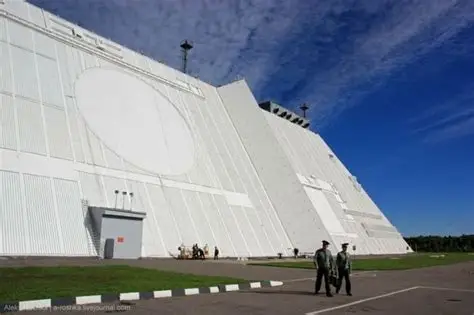
Missile-warning radars (СПРН). The Voronezh family of VHF, UHF and centimetre phased arrays watches the strategic approaches out to about 6,000 km and replaced the Soviet Dnepr and Daryal network. They see missiles and satellites, not small aircraft, and they report to the Main Missile Attack Warning Centre at Solnechnogorsk, which cues Don-2N. A Voronezh at Armavir took drone damage in May 2024. [DOCUMENTED]
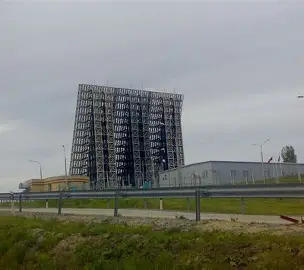
Over-the-horizon radar. The HF sky-wave 29B6 Container in Mordovia watches aircraft and missile launches 900-3,000 km away over Europe, and was itself hit by drones in April 2024. OTH radar is a weather-dependent cueing sensor, not a fire-control radar. See Over-the-horizon radar. [DOCUMENTED]
Radar troops' surveillance radars. The radio-technical troops (радиотехнические войска, РТВ) run radar companies and battalions that build the air picture for whole regions: the VHF/UHF/centimetre Nebo-M family, the low-altitude Podlet-K1 and Kasta-2E2, older P-18 and 55Zh6 sets, and others. Their tracks go to brigade and division command posts, which pass them to SAM regiments and fighters. Podlet and Kasta have no separate article here yet. [DOCUMENTED]
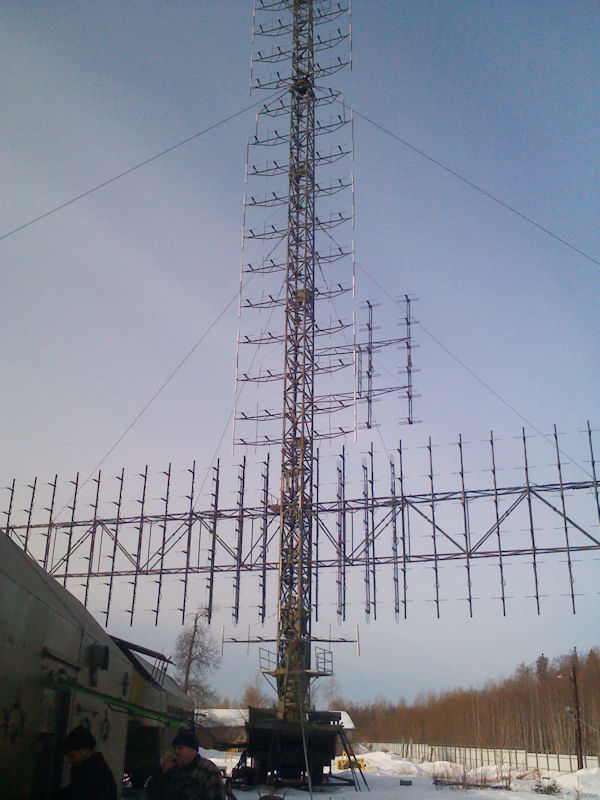
System radars. Each SAM system has its own acquisition and fire-control radars: 91N6E, 96L6 and 92N6E for S-400; 9S15/9S19/9S32 for S-300V; 9S18M3 and 9S36M for Buk; the vehicle radars of Tor and Pantsir. These are what actually guide missiles; the radar troops' sets give them cueing. [DOCUMENTED]
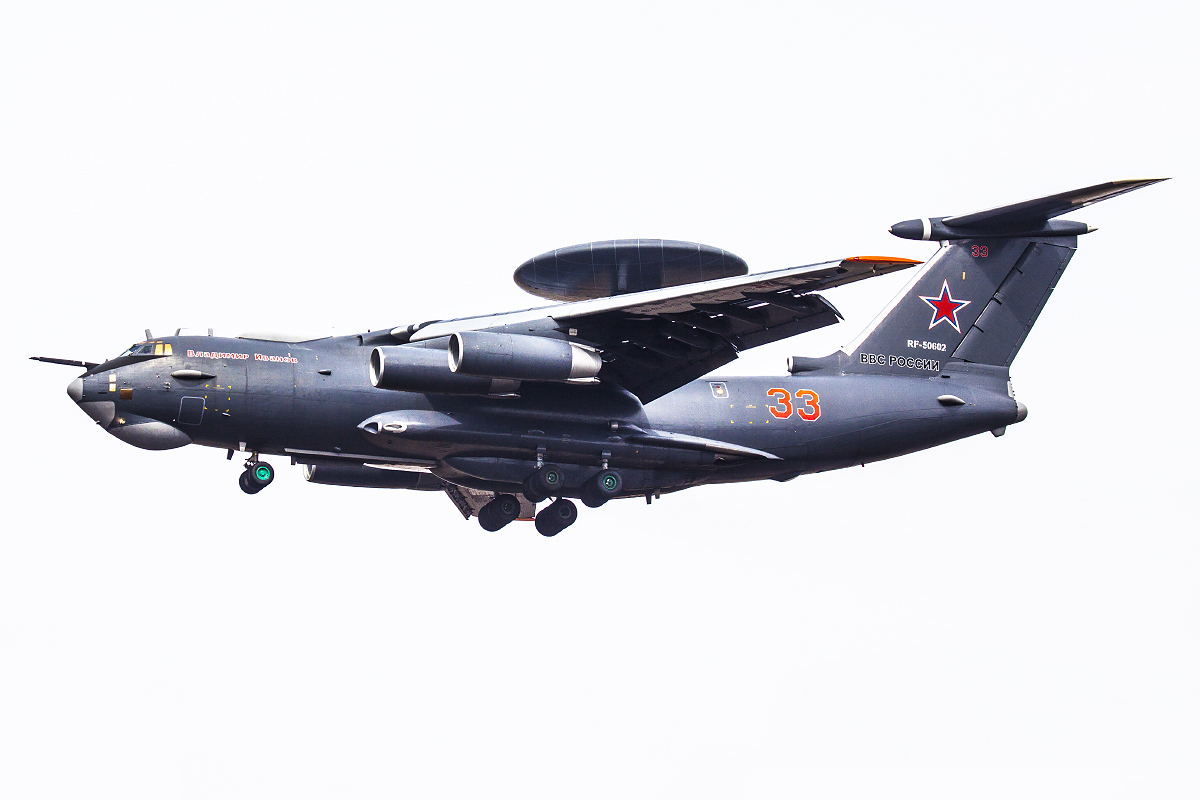
Airborne radar. The Beriev A-50 / A-50U sees low-flying targets far beyond any ground radar's horizon and directs fighters. The A-100 Premier successor has not entered service in numbers. At least two A-50s were lost in early 2024, which Ukraine claimed as shoot-downs. [DOCUMENTED for losses; cause sources conflict]
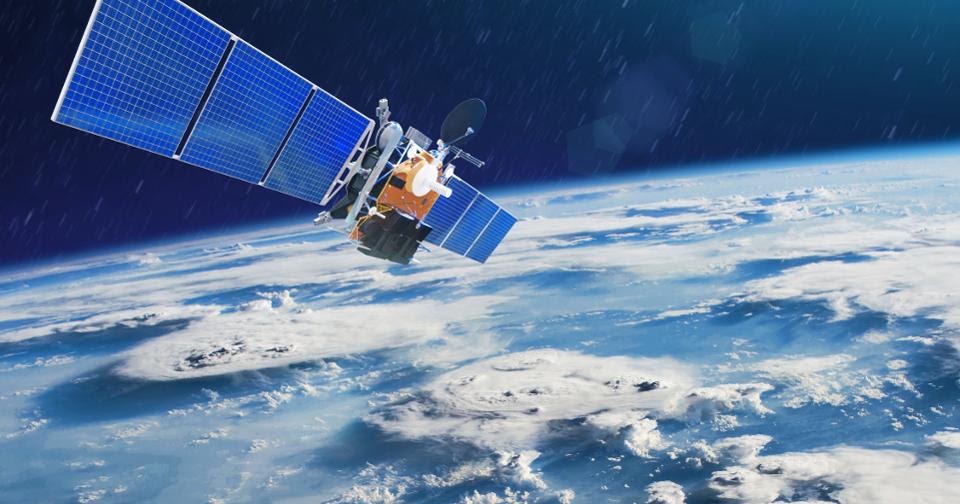
9. SPACE: OKO AND EKS KUPOL The top sensor layer is the infrared early-warning satellite. The Soviet Oko (US-K) and Oko-1 (US-KMO) satellites watched for rocket plumes from highly elliptical and geostationary orbits; their ground station was Serpukhov-15, the building where Stanislav Petrov ignored a false alarm in 1983. The Oko constellation ran down in the 2010s. Its successor is the Unified Space System, EKS Kupol, with Tundra (14F142) satellites in Molniya-type orbits, launched from 2015. Kupol detects launches within seconds to minutes; the radars then confirm and track. Exact constellation size and coverage are not public. [DOCUMENTED; constellation size ESTIMATE in sources]
10. FIGHTERS AS PART OF THE SYSTEM Fighters are part of air defence, not a separate world. The MiG-31 interceptor, with its Zaslon phased-array radar and long-range R-33 / R-37 missiles, was designed to patrol the northern approaches against cruise-missile carriers and cruise missiles themselves, and works under ground control or with the A-50. Su-35S and Su-30SM fighters fly air-defence patrols too, and fighters have been reported shooting down drones over Russia. Ground command posts hand fighters targets through the same automated systems that serve SAMs. [DOCUMENTED in general; individual shoot-down claims UNVERIFIED]
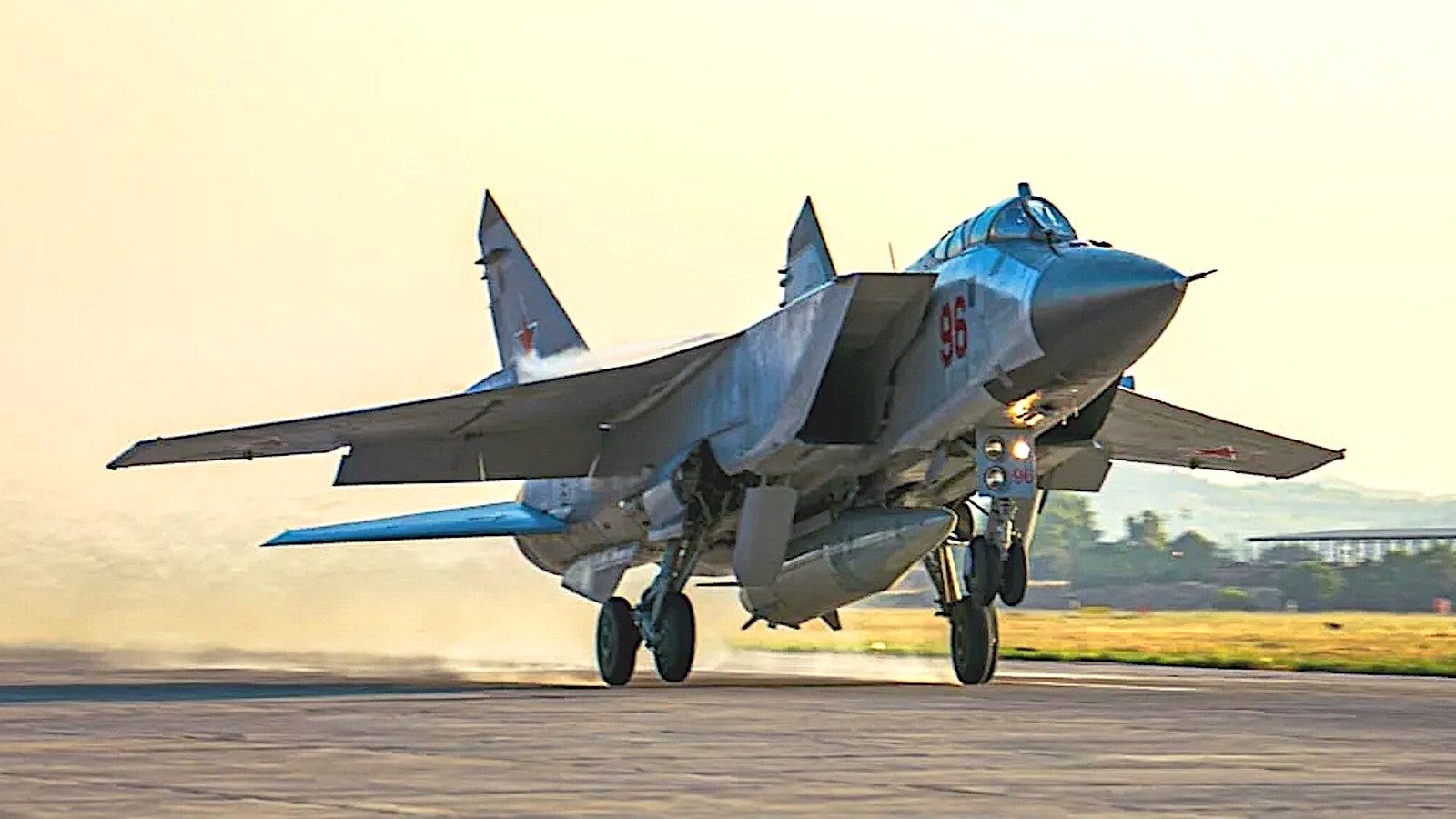
11. COMMAND, CONTROL AND NETWORKS This is the part that decides whether the layers above are a system or a pile of equipment. Open sources describe its structure well and its data links poorly. [BACKGROUND]
Who owns what. In the Aerospace Forces (ВКС, formed 2015 from the Air Force and the Aerospace Defence Troops), the air- and missile-defence forces are air-defence divisions and brigades inside the air and air-defence armies of the military districts, plus the Moscow-region 1st Air and Missile Defence Army (Special Purpose), formerly the Special Purpose Command, which owns the Moscow air-defence belt and A-135. The Space Troops inside the Aerospace Forces own missile-warning radars, Kupol, and space surveillance (including Krona). The Ground Forces' military air defence is separate, with its own brigades at army level (S-300V4, Buk) and battalions and batteries inside divisions and brigades (Tor, Strela-10, Tunguska, MANPADS). [DOCUMENTED]
The practical meaning: a Buk brigade belongs to an army commander and a Pantsir-guarded S-400 regiment belongs to an Aerospace Forces division, so tracks and target assignment have to cross service lines. In the war zone this is done through joint group-of-forces headquarters; the June 2026 Belousov statement on a single information environment is an admission that it was not yet seamless. [ESTIMATE, based on DOCUMENTED structure]
The automated control systems.
How a track moves. The Nebo article lays out the documented flow: a radar-troops' radar detects a target; its company or battalion post (with Fundament-type automation) sends the track to the brigade or division command post; the command post (Baikal or Polyana class) assigns it to a regiment; the regiment's 55K6E (or equivalent) gives target designation to its engagement radar, which looks where it is told instead of searching. Cueing lets the engagement radar use longer dwells and acquire at longer range, and lets it stay silent until needed, which matters against anti-radiation missiles. [DOCUMENTED flow; timings in that article are ESTIMATE]
For ballistic missiles a separate chain runs from Kupol and the Voronezh / Daryal radars to Solnechnogorsk, then to Don-2N and the A-135 command post, and to the General Staff. Whether and how that chain cues S-400 / S-500 batteries against non-strategic ballistic missiles is not described in open sources. [DOCUMENTED for the strategic chain; link to SAMs UNVERIFIED]
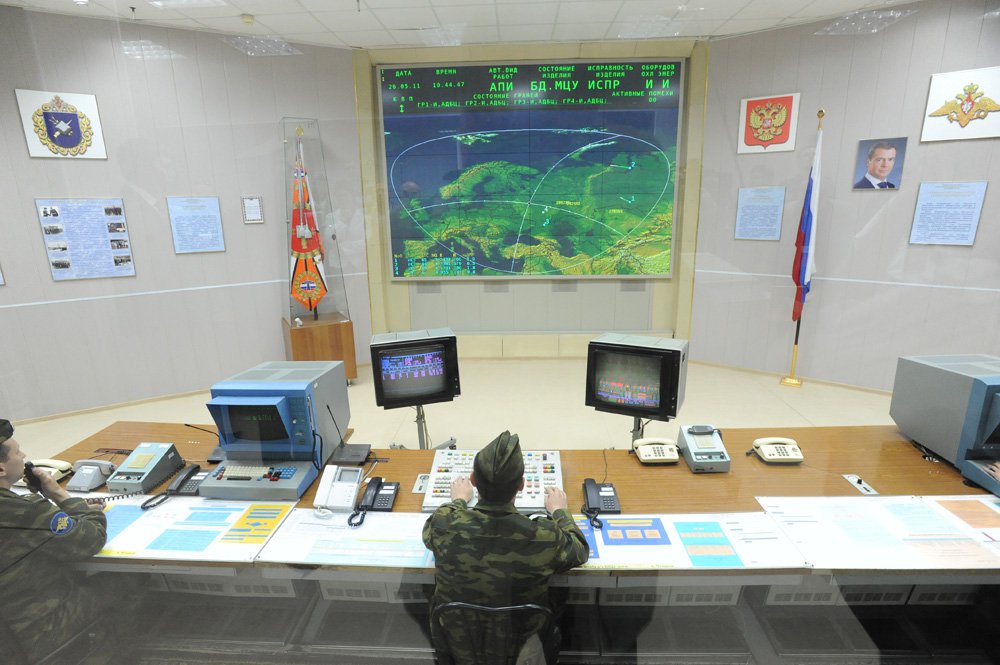
Data links and radio. This is where sources are thinnest. What can be said: every S-300V and S-400 element carries its own radio data equipment, so a battalion can deploy without cables, but radio link standards and message formats are not published (see Pantsir: "treat Pantsir talks to 55K6E as architectural intent, not a published ICD"). Fixed sites around Moscow and the warning network sit on the protected fixed communications described in Russian C3 (fibre, radio-relay and troposcatter links, HF and satellites); field units use radio-relay sets such as the R-423 Brig class and the Sozvezdie tactical systems (ESU TZ); and the 2026 "tablets for crews" described by Belousov imply a software layer riding on whatever bearer is available. The exact links used for air-defence track exchange are not public, and I do not name them. [DOCUMENTED for the general networks; specific AD link assignment UNVERIFIED]
Belousov's June 2026 remarks are the most direct official statement on networking: a single information environment from April 2026, "a radar does not exist if it is not seen in the unified system", software "from the tactical level and further on" that lets units determine targets, see the situation and manage the fight, tablets given to crews and crew commanders, and "a combat vehicle, a mobile fire group, control posts, radars" all linked into one system. He said AI-assisted decision support for air defence was due by November 2026. [DOCUMENTED, TASS 29 June 2026]
The visual air observation post (пост ВНОС, a term from the Second World War) has also returned: soldiers with binoculars, acoustic sensors and radios on the drone routes, who are what triggers the mobile fire groups in the Izvestia reports. [DOCUMENTED for observers in those reports; the VNOS label is BACKGROUND]
11A. SITE OWNER'S ASSESSMENT: COORDINATION OVER RADIO It is an assessment, not a sourced description of Russian equipment. [BACKGROUND]
The exact radio and data-link formats Russian air defence uses between radars, command posts and fire units are not public, and nothing here names one. What is clear is that the different groups, from mobile fire groups and SHORAD batteries to the medium- and long-range S-300 / S-400 battalions, do not operate as islands. The radar networks feed target information out to the groups over radio and data networks, so a gun truck or a Pantsir crew is cued onto a track it could not have found alone, and each layer is more effective than it would be by itself. [FIELD ACCOUNT, site owner]
That reading fits the documented pieces in section 11: tracks pass from radar-troop radars through brigade command posts to the batteries, observer posts radio the mobile fire groups out, and Belousov's "unified information environment" puts "a combat vehicle, a mobile fire group, control posts, radars" into one system with tablets at crew level. How much of that runs on digital links and how much on voice radio, especially at the bottom layer, is unknown; the owner's expectation is a mix of both, with voice nets carrying cueing wherever data links are not fielded. [SPECULATION, site owner]
11B. PASSIVE DEFENCE: HARDENING SITES Alongside the guns and missiles, Russia has built a large amount of passive protection since 2022: nets, cages, shelters and barriers that try to make a drone or missile explode early, miss, or hit the wrong thing. [BACKGROUND]
Refineries. In April 2024 the head of Bashkortostan said Bashneft had "secured the main columns" of its refineries "with mechanical protection nets" (Reuters). Satellite imagery from October 2025 shows netting over three storage tanks at the Kuybyshev refinery in Samara (Business Insider, Vantor imagery). Reports also describe metal frames with mesh over tanks, pipelines and loading platforms, and whole process units caged, at Samara and near Ufa and Oryol. Ukrainian-side reporting says the nets are thin, tear easily, and are bypassed by hitting pipelines, pumps or rail loading instead. [DOCUMENTED for Bashneft and Samara nets; extent and effectiveness SINGLE-SOURCE, Ukrainian-side reporting]
Air-defence systems themselves. A Pantsir placed near the Moscow refinery in June 2026 had a protective anti-drone cage over its cabin, which Defense Express noted had not been seen on Moscow-area systems before and read as a sign of a unit brought in from the front. Around Moscow, other Pantsirs sit on towers. [SINGLE-SOURCE, Defense Express via Kyiv Post and NV; tower siting DOCUMENTED]
Airfields. After repeated drone strikes and the June 2025 "Spiderweb" attack, imagery showed new aircraft shelters at Russian bases: at Khalino about 10 earth-covered bunkers, 12 concrete shelters and eight hangar-type structures; two concrete shelters at Saky; domed shelters with blast doors at Millerovo, Kursk and Hvardiiske, the UK MoD reported. An OSINT analyst counted 14 airfields with shelter construction, including Engels and Yeysk. Simple decoy aircraft had been used at Primorsko-Akhtarsk earlier. [DOCUMENTED, ISW, UK MoD, Moscow Times; 14-airfield count SINGLE-SOURCE]
Roads and logistics. At the front, Russian engineers have hung mesh "tunnels" and screens on poles over the most exposed roads, starting with more than 2 km between Bakhmut and Chasiv Yar in early 2025, so that an FPV drone tangles its propellers or detonates on the net; Izvestia reported kilometres of such screens. They also stop fibre-optic drones, which ignore jamming, but they need constant repair and skilled pilots can fly under them. Ukraine uses the same nets. [DOCUMENTED, TWZ, Militarnyi, Calibre Defence citing Izvestia; effectiveness Sources conflict]
The Crimea (Kerch) bridge. The most heavily hardened single target: lines of barges, floating booms, sunken "hedgehogs" and tetrapods, and metal grille fences on piles against naval drones, plus smoke generators against aerial attack, with Pantsir, S-400/S-300 and reportedly S-350 positions nearby. Ukraine's Center for Journalistic Investigations reports that some barges carry corner reflectors to act as radar decoys, quoting a Russian commentator. [DOCUMENTED, RFE/RL, UK MoD via Kyiv Post; decoy role SINGLE-SOURCE]
None of this replaces the active layers; it buys a little more margin when a drone gets through them, which is why it has spread from front-line vehicles to strategic sites. [ESTIMATE]
12. THREAT BY THREAT: WHO ENGAGES WHAT
| Threat | Primary layers that engage it | Supporting sensors & passive measures |
|---|---|---|
| ICBM / SLBM warheads | A-135 / A-235 around Moscow only; S-500 claimed | Kupol satellites, Voronezh / Daryal / Dnepr radars, Don-2N; elsewhere warning and retaliation |
| Tactical / theatre ballistic missiles | S-300V/V4, S-400, S-500; S-300PM; Buk-M3 claimed | System radars (96L6, 91N6E, 9S18, 9S36), Nebo-M, Voronezh |
| Hypersonic / glide weapons | S-500 (claimed); S-400 / S-300V4 limited | Voronezh early warning, Kupol, Nebo-M |
| Cruise missiles | S-400, S-350, S-300PM, Buk-M2/M3, Pantsir, Tor | A-50 / A-50U, Podlet and Kasta low-altitude radars, Nebo-M, visual posts |
| Manned aircraft & helicopters | S-400, S-300, S-350, Buk; Tor, Pantsir, Strela-10, Tunguska; Igla / Verba | Nebo-M, A-50, system radars, Polyana-D4 / Baikal track sharing |
| Long-range one-way attack drones | Pantsir, Tor, mobile fire groups, ZU-23-2, interceptor drones, helicopters | Podlet, Kasta, Garmon, Gibka-S, visual observation posts; nets, cages, barriers at key sites |
| FPV & small drones | Small arms, machine guns, shotguns on vehicles; EW on vehicles | Visual observers; vehicle cages and nets, site nets and barriers |
ICBMs and SLBMs. Detection by Kupol, then Voronezh / Daryal radars, fused at Solnechnogorsk; warning goes to the national leadership. Engagement is possible only around Moscow, by A-135 / A-235 interceptors guided by Don-2N; S-500 is claimed to add capability. Everywhere else in Russia, the "defence" against an ICBM is warning and retaliation. [DOCUMENTED structure; ESTIMATE for effectiveness]
Glide vehicles and hypersonic weapons. Russia claims S-500 is designed against them; no public test shows it. The nearest real experience is the other way round: Ukraine claimed shooting down Russian Kinzhal missiles with Patriot in 2023. [DOCUMENTED claims; capability UNVERIFIED]
Tactical ballistic missiles. ATACMS-class missiles are the target set of S-300V4, S-400 (in its terminal ballistic belt) and, close in, Pantsir and Tor against debris and submunitions. Russia reported many ATACMS intercepts in 2024; Ukraine and Western reporting describe several successful strikes on Russian airfields and air-defence sites with them. Sources conflict. [DOCUMENTED that both sets of claims exist]
Cruise missiles. Storm Shadow / SCALP, Neptune and US-made cruise missiles fly low and are seen late by ground radars; the system depends on the A-50, on low-altitude radars like Podlet and Kasta and on Pantsir / Tor / Buk point and area defence near the target. Russia regularly claims intercepts; successful hits on Crimean and Russian targets show that some get through. Sources conflict on the ratio. [DOCUMENTED that both sides claim]
Aircraft and helicopters. The classic targets of the whole system. Long-range SAMs have pushed Ukrainian aircraft to fly low and launch stand-off weapons; S-400 shots have been claimed at very long range. Russian losses of its own aircraft to friendly fire have also been reported. [DOCUMENTED claims]
Long-range one-way attack drones. FP-1, Liutyi, MICH-2000 and similar drones are slow, cheap and numerous, and fly hundreds or more than a thousand kilometres to refineries, airfields and factories. Every layer is used against them: radar-troop radars and observers detect them; fighters, helicopters (Mi-28, Ka-52), Pantsir, Tor, Buk, S-300/S-400 and mobile fire groups engage; EW tries to defeat their navigation. The Russian MoD routinely announces dozens to hundreds of drones "destroyed and intercepted" in a night; Ukrainian and independent sources document many hits on refineries and also on air-defence radars themselves (Armavir Voronezh, the Container OTH, S-400 elements). Sources conflict on the numbers. [DOCUMENTED for both sets of claims] At the target end, refineries and airfields now add nets, cages and shelters (section 11B).
FPV and small tactical drones. Close to the front, these are the job of EW, mobile fire groups, interceptor FPV drones, shotguns and every soldier; SAMs are not used against them except in self-defence. Belousov's "layered system of tactical interceptors" refers to this layer. [DOCUMENTED] Passively, nets over roads and cages on vehicles and launchers are the other answer at this level (section 11B). [DOCUMENTED]
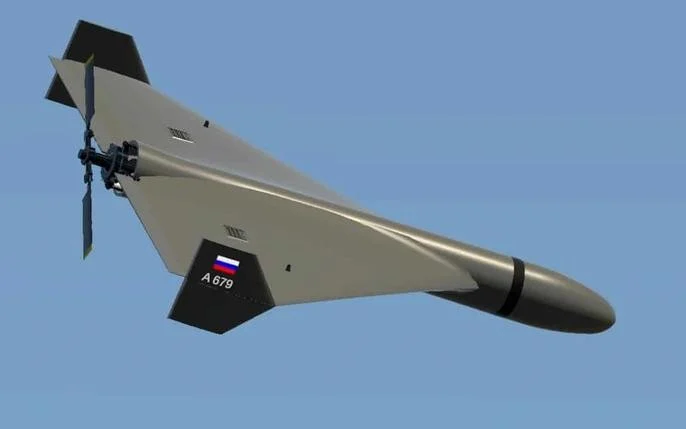
The Geran-2 is included here only as the Russian mirror image: the same class of weapon, used by Russia against Ukraine, which explains why both sides' defences have converged on guns, helicopters and interceptor drones. The jet Geran-4 and Geran-5 add the Susanin optical scene-matching navigator, which keeps them on course with satellite navigation jammed. [BACKGROUND]
13. PERFORMANCE IN THE UKRAINE WAR What can be said without taking either side's numbers at face value: * Russian ground-based air defence made manned flight over and near the front lines very dangerous for Ukrainian aircraft from 2022 onwards. [DOCUMENTED across many Western analyses] * The system has not prevented repeated long-range drone strikes on Russian refineries, airfields and military sites deep inside Russia. [DOCUMENTED] * High-value parts of the system itself have been hit: S-300/S-400 launchers and radars in Crimea and elsewhere, the Armavir Voronezh (May 2024), the Container OTH (April 2024), A-50 aircraft (2024), and Pantsir, Tor, Buk and Garmon systems near the front. [DOCUMENTED, mostly from Ukrainian claims with imagery; some confirmed by satellite imagery] * Interceptor stocks and cost-per-kill against cheap drones are the central pressure, which is why the system has moved down toward guns, helicopters and drones. [ESTIMATE, consistent with Belousov and Lushnikov statements] * Exact interception rates are not knowable from open sources. Russian MoD daily totals and Ukrainian strike claims both serve their authors. Sources conflict.
14. SCENARIOS These are syntheses of the documented pieces above. Nothing in this section is a description of an actual Russian plan. [SPECULATION throughout]
Scenario A: a long-range drone raid on a refinery in central Russia. Thirty fixed-wing one-way drones launch from Ukraine at night on several routes. Radar-troop radars (Nebo-M, Podlet) and observer posts along the border pick up some of them; the tracks go through the brigade command post into the regional picture. Fighters on alert and Mi-28 or Ka-52 helicopters are vectored to known routes; Pantsir and Tor batteries around the refinery are alerted; mobile fire groups and territorial units with machine guns and ZU-23-2 move to their positions on the approach. GNSS jamming around the site tries to pull drones off course. Nets over the main columns and tanks are meant to make the drones that get through detonate early. Most drones are engaged; a few reach the refinery and start a fire in one unit; the MoD announces a large number "destroyed"; satellite imagery a day later shows damage. Weak points: radar gaps at low level, saturation of the point-defence battery, and the drones that are never seen at all. [SPECULATION]
Scenario B: a cruise-missile and drone strike on the Moscow region. Drones arrive first to make the radars radiate and the batteries spend missiles; cruise missiles follow on low routes. The 1st Air and Missile Defence Army's picture is built from Nebo-class radars, S-400 / S-500 system radars and A-50 if airborne, fused by Baikal-1 / Universal-1 command posts. S-400 regiments engage at longer ranges; Pantsir batteries, some on towers and rooftops, handle what leaks through near the city; fighters cover the outer approaches. The strengths here are density and layered sensors; the weaknesses are terrain-masked low routes, decoys and magazine depth. [SPECULATION; Moscow belt composition DOCUMENTED]
Scenario C: an ICBM attack on Moscow. Kupol sees plumes within minutes of launch; Voronezh radars acquire the warheads as they rise above the horizon; Solnechnogorsk issues a warning, and the national leadership is warned through the Kazbek chain. Don-2N picks out warheads from decoys and A-135 / A-235 interceptors fire in the last minutes. Against a few warheads this may help; against a full strike, the defence saturates and the outcome is decided by retaliation, not interception. Beyond Moscow there is no ABM firing layer. [SPECULATION; chain DOCUMENTED]
15. GAPS: WHAT I COULD NOT SOURCE * The specific radio and data-link standards used between Russian air-defence command posts, batteries and radar units, beyond the general networks. * Current numbers of S-400, S-500, S-350 and A-235 elements on duty. * Whether the strategic missile-warning chain cues S-400 / S-500 batteries against tactical ballistic missiles. * Reliable interception rates for any layer in the Ukraine war. * Details of the AI decision-support project Belousov said would be ready by November 2026. * Which EW systems are responsible for the GNSS disruption around particular Russian sites.
HOW THIS ARTICLE WAS BUILT This is a master article. Most technical detail comes from this site's existing deep articles, each of which lists its own sources: ZU-23-2, Shilka, Igla, Verba, Gibka-S, 1L122 Garmon, Pantsir, Tor, Strela-10, Sosna, Tunguska, Kashtan, Buk-M3, S-300, S-300V, S-400, 91N6E, S-500, A-135 / A-235 / Nudol, Don-2N, Voronezh, Dnepr, Daryal, 29B6 Container, OTH radar, Nebo, A-50, EKS Kupol, Serpukhov-15, Solnechnogorsk SPRN, Krona, MiG-31, Geran-2, Russian C3, R-423 Brig, Sozvezdie ESU TZ.
New sources for this article:
Organisation of the Aerospace Forces and the identification of S-350, Krasukha, Podlet and Kasta draw on standard reference works (Russian MoD site, Military Balance) and general knowledge; specific figures for those systems have been kept out where I could not check them. [BACKGROUND]
IN ONE SENTENCE Russian air defence is a sixty-year accumulation of separately owned layers, from a machine gun on a pickup and a helicopter cannon up to S-400, S-500 and the Moscow ABM system, fed by radars from backpack sets to Voronezh and Kupol satellites and joined by Polyana, Baikal, Universal and Fundament command systems over networks that are only partly public, and since 2022 it has been rebuilt from the bottom up around the cheapest threat it faces.